


This essay was written by Chandhana Sathishkumar, a student at UNC Chapel Hill and an independent chemistry researcher – you can read more of her work on her blog.
We tend to assume that once we know things, we’ll keep knowing them. But I’m not so sure this idea is true. Take the story of the Antikythera Mechanism for example:
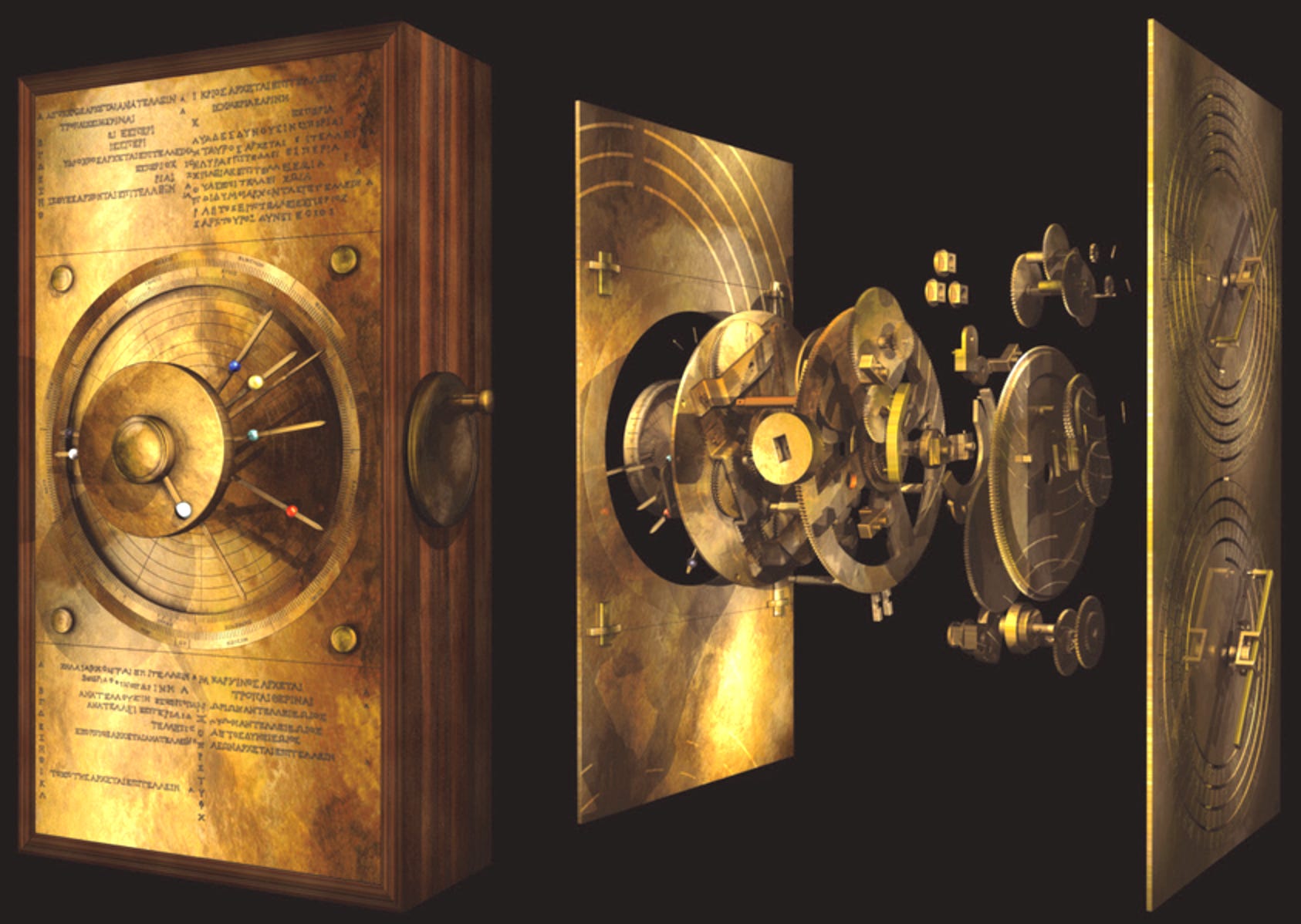
In early 1900, a crew of sponge divers discovered the wreck of a Roman cargo ship near the Greek island of Antikythera. Among the many objects they eventually recovered in an expedition alongside the Hellenic Royal Navy, was a lump of corroded wood and bronze, encased in a mineral deposit, which cracked and shrank when it was brought up from the shipwreck. For two years, it lay unnoticed and untreated, leading it to be deformed. In 1902, an archaeologist found that one of the pieces of rock had a gear wheel embedded in it, and suggested that it might be an astronomical clock, but this was regarded as too ‘prochronistic’ (from Greek pro, ‘before’, + chronos, ‘time’; ahead of its time; belonging to a later period). It would take more than half a century until we began to recognize this hunk of bronze to be one of the oddest archaeological mysteries that we know of today: a 2000-year-old computational device called the Antikythera mechanism (AM) that could perform different calculations of astronomical cycles.1
The output of the AM was the entire snapshot of what the sky looked like on that particular date. On the front, a couple of pointers show where the sun, moon, and five planets would have been. On the back of the mechanism there is a spiral that tells you which month you are on in the 19-year lunar calendar cycle. A smaller dial mentioned the Panhellenic game cycles (including the timing of the Olympic Games). Other information it contained includes both the lunar and solar eclipses marked along a 223-month Saros spiral.2 And still more dials tracked the 54-year Exeligmos3, the 76-year Callippic cycle4, and a 365-day Egyptian calendar. The Moon’s varying speed was also reproduced mechanically.5
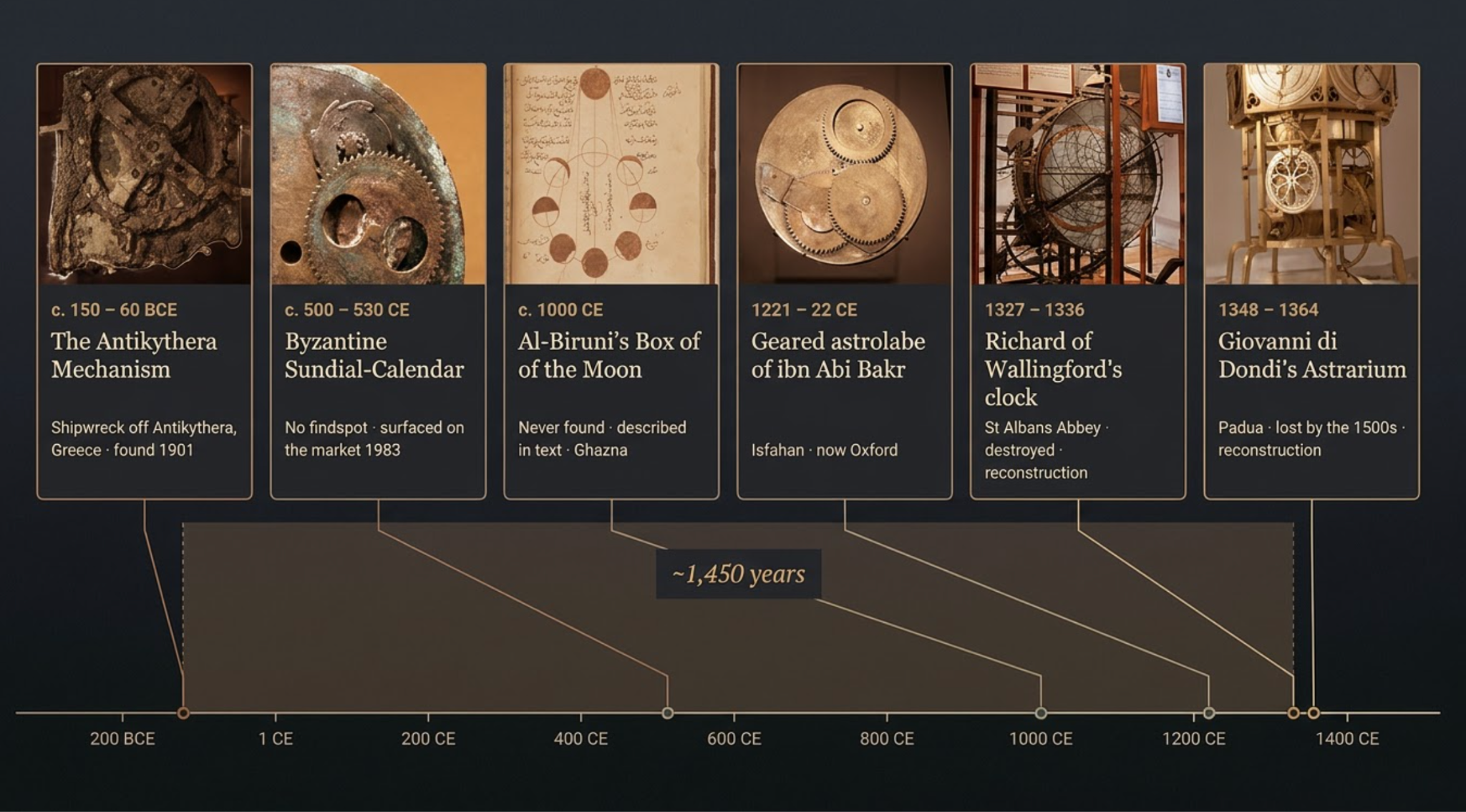
It is difficult to wrap your head around how truly ahead of its time the AM was – it’s way more advanced than anything that came before and anything that came for a long time after. If a simplified definition of a computer is a machine that takes an input, processes it according to a set of rules and produces an output, then the Antikythera mechanism is the oldest surviving example.
Here’s a timeline of comparable technologies for reference; only the final two examples come remotely close to the original mechanism’s complexity! Isn’t it ironic that we know so little about an object that was built on sharing knowledge across cultures?
This raises a fascinating set of questions: Who made it? Why did they choose to do so? Where was this manufactured? And how did they pull off such a feat of engineering? Tracking down these lines of inquiry is rather difficult given that the mechanism does not exist in any direct literary account. This is in addition to the fact that the current list of experiments that have been run on the device are not particularly comprehensive: a century of naked-eye study, one destructive chemical assay, gamma rays, a homemade tomography rig, an 8-ton CT scanner and an Indiana Jones movie.
Given the array of currently available evidence and amount of mystery that surrounds the Antikythera, I was in a state of constant skepticism about the object’s provenance – which was duly entertained by Ben Arbuckle, my professor at UNC whose class first introduced me to the AM. Which somehow led to me – strapped with the blind confidence my generation is gifted with – to spend a few weeks in Athens and Alexandria6. I did not find answers to all the questions I went with but I did find more questions to my answers. This is an essay of what I found, what I couldn’t find, and what could still be done.
In pursuit of dating the object
Through its mechanical details
First I need to take a moment to re-emphasize the absurdity of this discovery. The Antikythera at its core is an aggregation of many, many sources of calendars into a snapshot of what astronomical, mechanical, and mathematical knowledge was like 2000 years ago.
To make this happen, someone had to know how to turn astronomical calculations into a working arrangement of bronze gears –– making and fitting those tiny parts by hand. Someone had to observe the cycles, understand them mathematically, devise a mechanical representation, manufacture the components (also by hand), and assemble them into an elegant machine.
A machine that:
Has at least one piece whose functions we do not know.
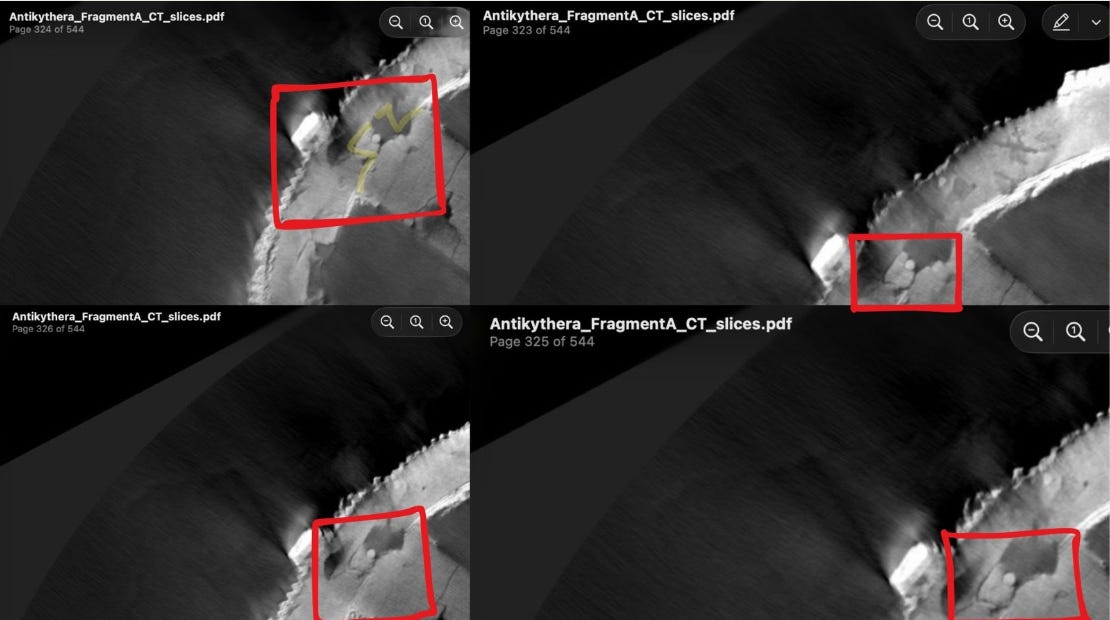
Made use of a dovetail joint (as seen on the CT) which was common on wood but I’ve never seen one on bronze before.
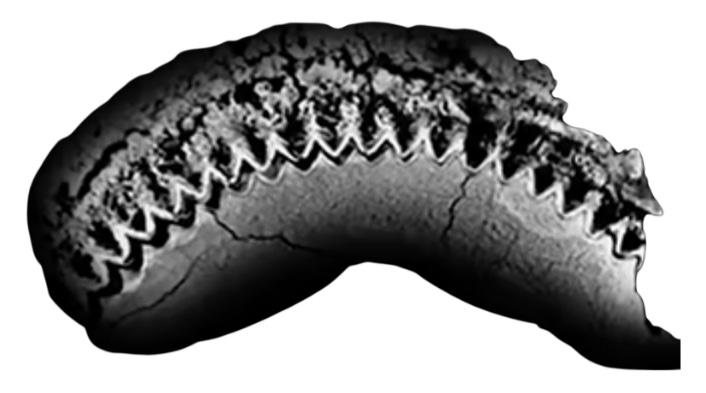
Contains many many intricate equilateral triangles. Here Tyler Cowen summarizes it best: “And to me, the Antikythera Mechanism does not sound like a “lone genius” kind of device: ‘The gear teeth were in the form of equilateral triangles with an average circular pitch of 1.6 mm, an average wheel thickness of 1.4 mm and an average air gap between gears of 1.2 mm. (Wikipedia)’ That suggests it was made by some kind of regular industrial process7. It also had some sophistications which modern Swiss watches do not.”
Has gears with prime numbers of teeth: 127 on d2, 223 on e3, and 53 on f1 and l2. These numbers came from the astronomical relationships the mechanism was modelling. How do you mark out 127 evenly spaced teeth around a bronze wheel, then cut them accurately enough to mesh with the next one?
Through its maker
Given the technical sophistication of the object, it is also worth asking who had the know-how to make something like this. Again, there are more questions than answers here but the leading theories include:
Posidonius, because Cicero writes in De Natura Deorum II that he saw a sphere Posidonius built on Rhodes that showed the sun, moon, and planets. Cicero has a reputation for bragging, so it’s unclear how literally to take his writings.
Hipparchus because the pin-and-slot device found in the mechanism encodes his lunar anomaly theory, and the star calendar on the front face of the mechanism is calibrated for 33-37° latitude, which includes Rhodes. The island also had a very strong bronze industry. Plus the Halieia games on the dial are a Rhodian festival.
Archimedes is also a popular favorite, partly thanks to Indiana Jones. But he died in 212 BCE, before construction dates we’ve accepted as of today. So, if there is any connection at all, it has to have been his disciples and not him.
Knowing who made it would also help answer the other questions of when and where it was made.
Through its workshop
Current estimates of the mechanism’s construction lay between roughly 200 and 60 BCE based on the lettering on it and coins recovered from the wreck. The mechanism is assumed to have been on the ship, which makes sense given that it was recovered during the salvage off the coast of an island south of Kythera, hence the name Antikythera. But it’s not believed to have been made there.


It could have been constructed on Rhodes for the same reasons as Hipparchus. Or it could have been made in Epirus, a region in northwest Greece, whose calendar is the strongest month-name match (though there is probably reason to not read too much into the calendars because they could have been calibrated to the buyer’s city and not the workshop’s.)
My personal theory is that the construction took place in Alexandria. It had the strongest inventing culture of the period. Ctesibius was building geared water clocks there before this mechanism existed and it was the place inventors from everywhere wanted to be. In a conversation I had with Toby Wilkinson, an Egyptologist, he put it this way: “The level of scientific knowledge in Ptolemaic Alexandria suggests that the conception and execution of such an object would have been well within the abilities of the scholars resident in the city. The loss of that knowledge, due in no small part to the destruction of the Great Library of Alexandria, must rank as one of the greatest tragedies for human civilization.” As a result, I take Alexandria seriously, though I’m still missing something that connects this particular mechanism to the city.
However, I must introduce some doubt as to whether we even know if the Antikythera was actually on that particular ship that it was salvaged from.
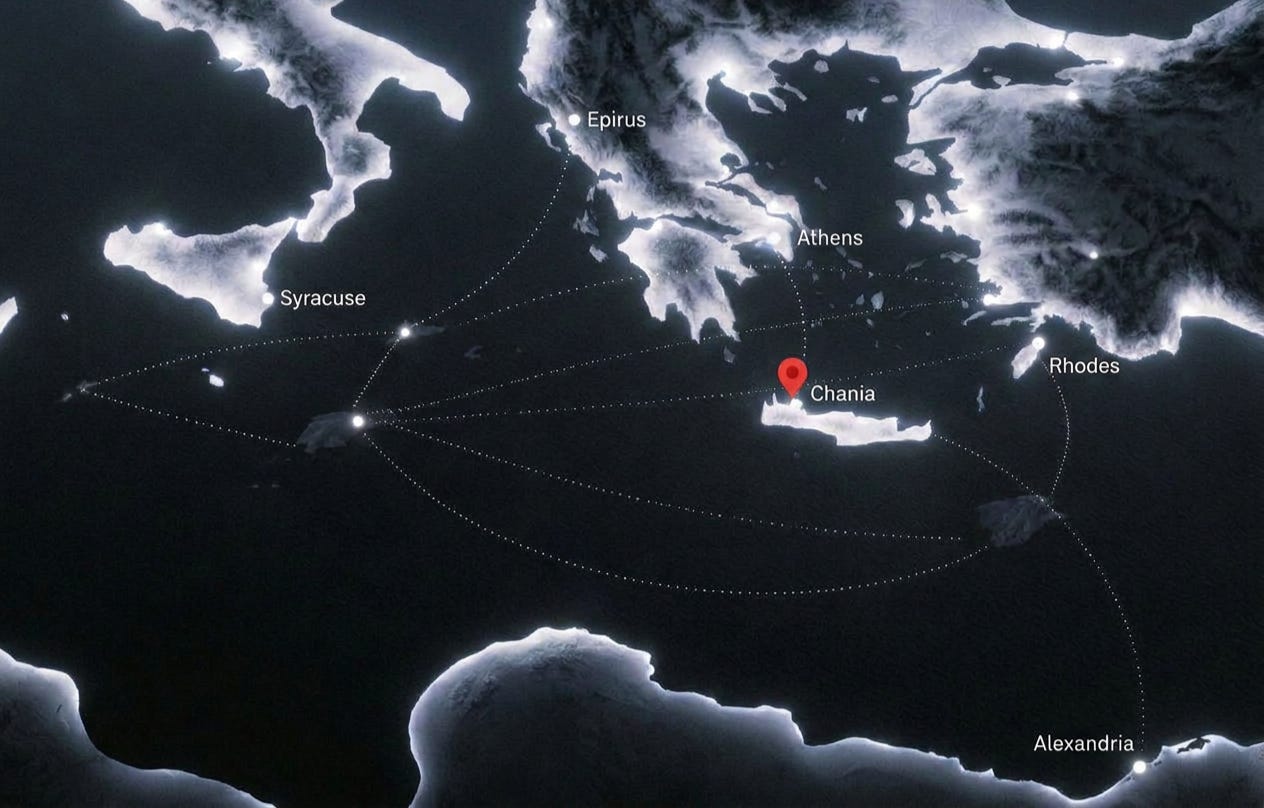
The sea is a tumultuous place. Could something have sunk there earlier, or later, and ended up amongst the same objects displaced by currents? There is actually another shipwreck about 200 meters away, confirmed as a separate wooden vessel in 2024. So there were at least two ships involved in leaving things on this patch of seabed, though that doesn’t tell us anything by itself about which one carried the mechanism. Without that information, I personally don’t place high confidence in pottery and coin based contextual dating.
Through its literary record
One way to answer the many unknowns about the provenance of the object could be by looking at other similar attempts in the hypothesized time period. After all, it is unlikely that the process knowledge it took to build the Antikythera emerged and disappeared in isolation.
I found some accounts of similar objects (in terms of type and function) when I was at the new Library of Alexandria8. Some that stuck out to me:
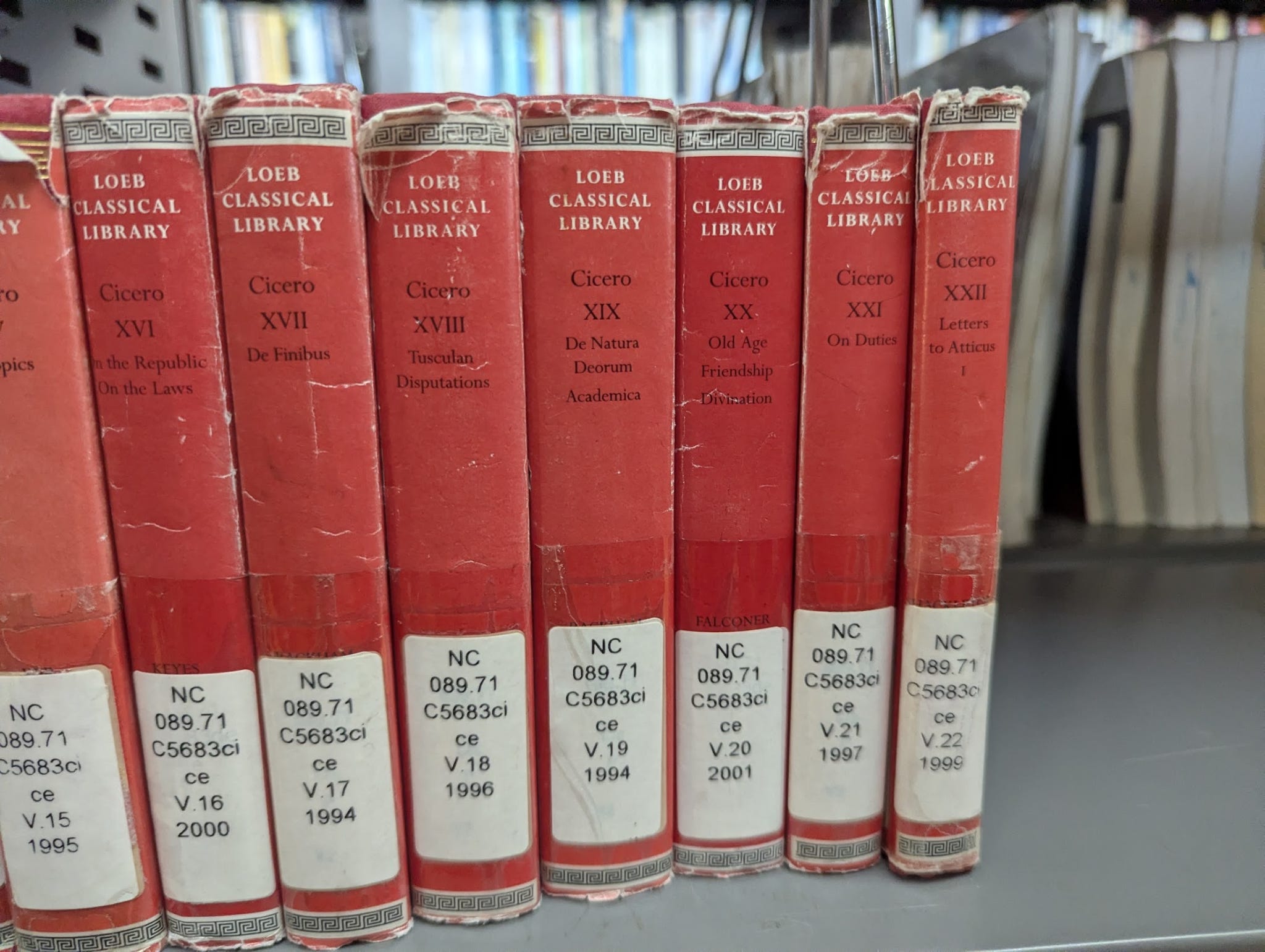
In De Re Publica, Cicero has Philus recount a demonstration of Archimedes’ sphere where a single turning action coordinated the different movements of the Sun, Moon and five planets, including configurations corresponding to eclipses, which is reasonably specific.
“And when Gallus moved the globe, it was actually true that the moon was always as many revolutions behind the sun on the bronze contrivance as would agree with the number of days it was behind in the sky. Thus the same eclipse of the sun happened on the globe as would actually happen…”
Another example is the sphere attributed to Posidonius in De Natura Deorum, which also reproduced the movements of the Sun, Moon and planets. So at least in these accounts, Archimedes wasn’t the only person making something like this.
“But if that sphere which was lately made by our friend Posidonius, the regular revolutions of which show the course of the sun, moon, and five wandering stars, as it is every day and night performed, were carried into Scythia or Britain, who, in those barbarous countries, would doubt that that sphere had been made so perfect by the exertion of reason?”
Roughly four centuries later, Claudian (a poet in the late Roman Empire) describes Archimedes’ sphere in verse in Carmina Minora:
“A false zodiac runs through a year of its own, and a toy moon waxes and wanes month by month.”
But none of the passages describe specific gear arrangements that make the Antikythera so unique, like its 235-month calendar spiral or the pin-and-slot device that varies the Moon’s speed.
Lastly, if the AM was as special as it sounds and seems then why was it lost? Again, all we have are a collection of loose theories:
It was too expensive to make, both material and knowledge wise, so not many were made to begin with.
Bronze and metal recycling was very common. A broken mechanism could’ve been melted to make other useful things like weapons. This may help explain why so many surviving ancient bronze statues have been found underwater and not on land.
It is clear thus far that a recurring theme surrounding the Antikythera is that we just don’t know. So I went to Greece to understand what we actually know, and more importantly, why do we know so little?
My rendezvous in Athens
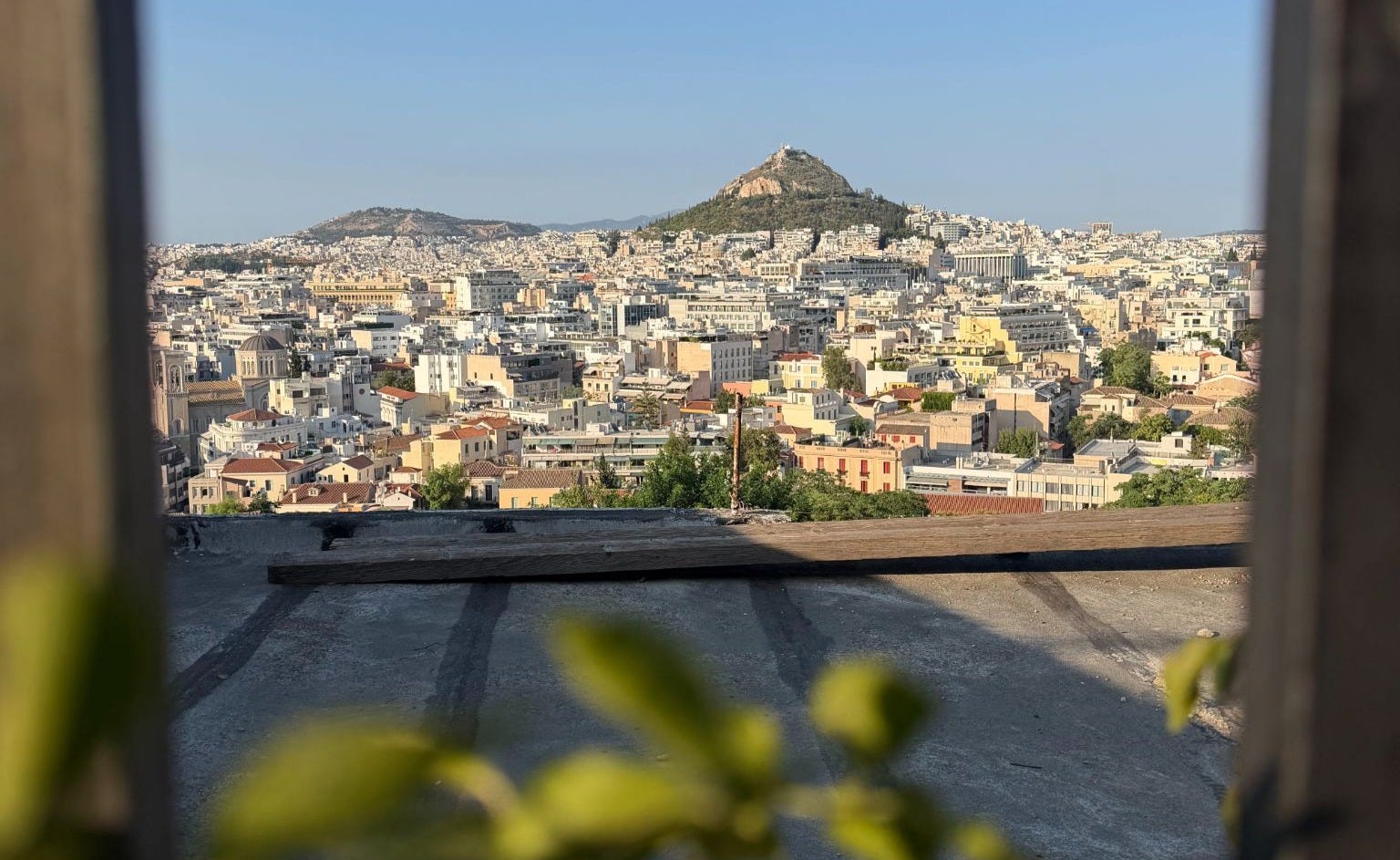
It was in Athens that I first lay eyes on the chunk of metal. Spread out over 82 fragments, some of them as small as my pinky finger’s nail and the largest one being the large gear that you see in the photo below, the shards of the machinery are some of the most famous objects in the Athens National Archeological Museum9. In-fact, the Antikythera section museum guard, my new found best friend, claims that “If ten people visit, eleven go to see it.”
And why wouldn’t they? Besides the fact that the AM is objectively very advanced, it was advanced in ways that could’ve snowballed technological advancement. A good parallel to understand this claim is found in the example of clocks.
Clockmakers knew how to build small moving parts that worked together reliably – those skills were useful well beyond telling time. In the 1760s, Richard Arkwright worked with a clockmaker named John Kay to develop a machine that spun cotton into yarn, helping lay the groundwork for factory production in the textile industry. Better timekeeping also made more accurate navigation possible. Ships could carry the time at a reference location and compare it with the local time to calculate longitude. Getting this benefit to the sailors, in turn, created incentives for further innovation in timekeeping so that ocean navigation could become an accessible commodity. This is one of the reasons why dismissing the Antikythera mechanism as a gimmick feels like a disservice. The manufacturing skills behind it could have been useful well beyond predicting the sky. To take it further, I believe that keeping the specific knowledge behind the Antikythera alive could have brought us an industrial revolution much earlier.
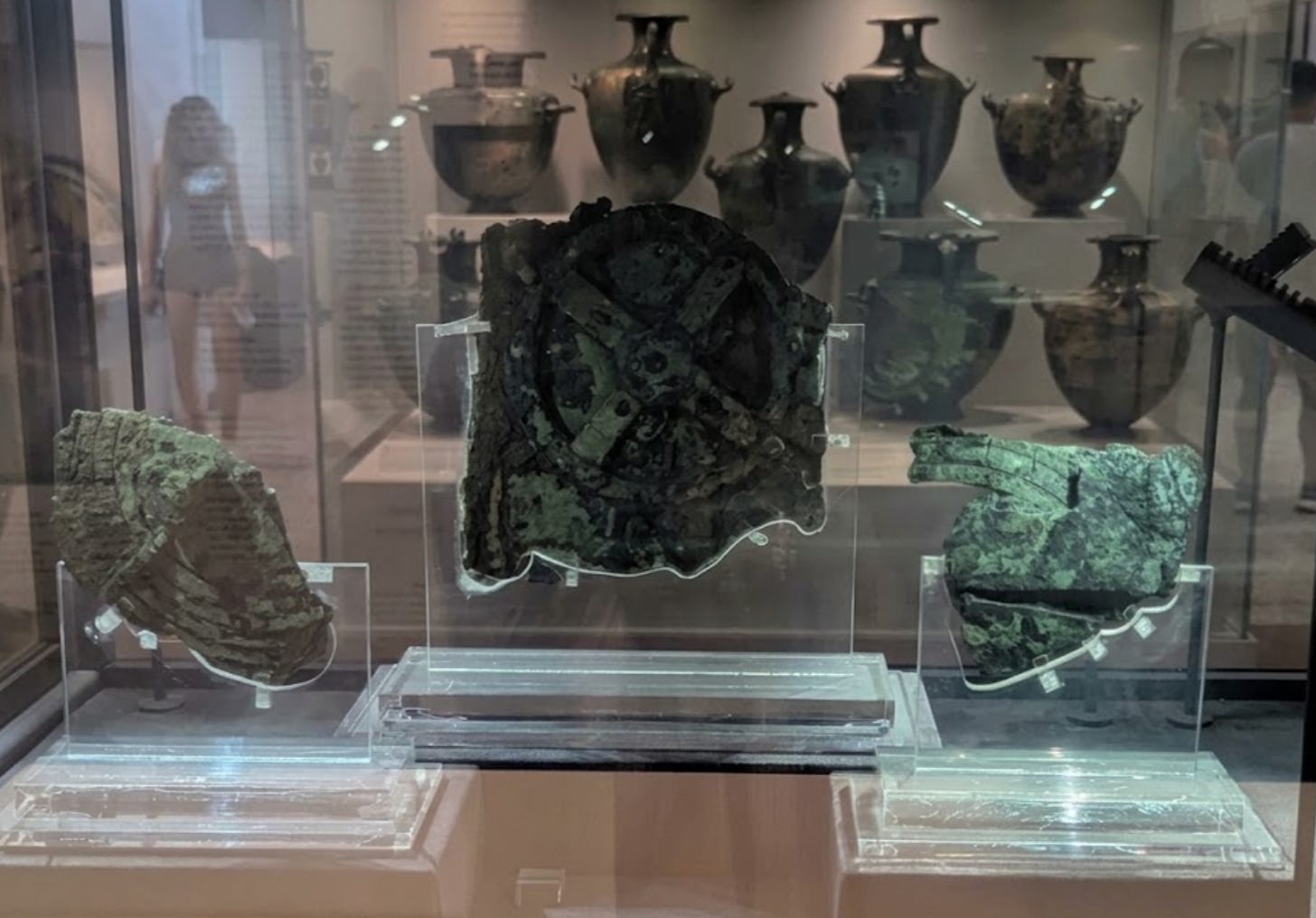
Given the gravity of my previous claim and the straightforward logic that brought me there, I suppose it shouldn’t have been surprising when I heard others at the museum in disbelief that the AM could really be 2000 years old. I also overheard a tour guide at the museum unironically tell his group that the object was probably made by aliens. Someone who worked for the NAM and requested to be unnamed said that they think the object is real but a stray that is misdated. And another affiliate fully believed that it was a financial sham run by researchers because it was a career-defining field of study.
It also doesn’t help that the museum does not allow duplicate tests to be run on the object, according to someone who worked there, so the barrier to entry in testing the mechanism is quite high10. So surely there is some dogma about the object, whether intentional or not. By the end though, my conclusion was that some things stated as ‘fact’ about this mechanism are based on rusty testing methods. Not out of malicious intent or anything, just bad inference. It also made me realize how much of ‘history’ is socially relevant story telling built around a limited set of ‘facts’.
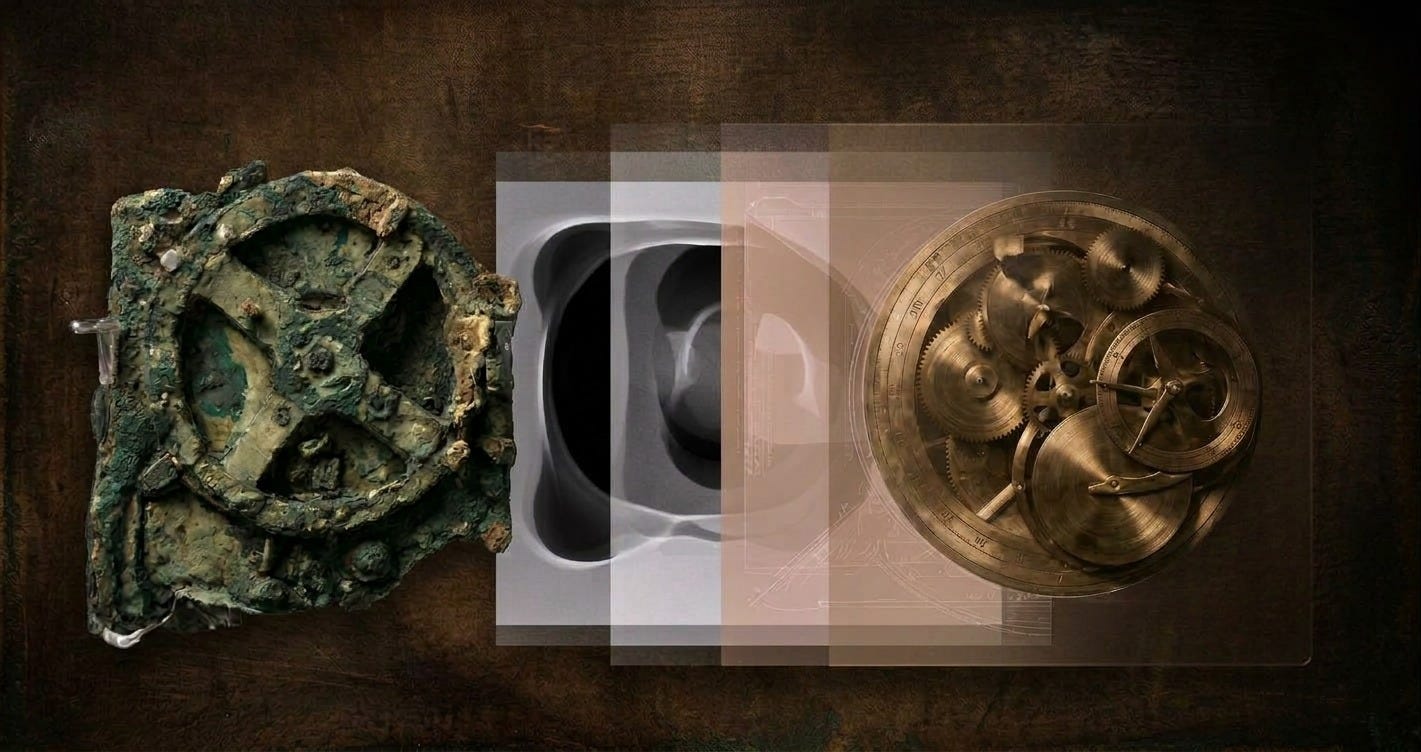
When some of the initial analyses on this object were done, they were done in destructive ways on – for lack of better words – “Antikythera mechanism powder” that was too fine to display in any meaningful way. Having spent a little bit of time testing for trace chemicals, it is wild that you could base an entire study on powder that could have just been ocean sediment deposited, not the actual material that the mechanism was made of.
Other experiments were more illuminating. In the 1970s X-ray scans finally revealed the gears buried inside the corrosion and the inscriptions hidden between layers of bronze – some of which describe what the machine displayed. Counting the number of teeth on the surviving gear helped calculate how the gears moved relative to each other and check whether those ratios match astronomical cycles. Broadly, the calendar and eclipse displays on the back of the AM are much better understood than the planetary display on the front (where much of the gearing is missing).


This method allowed for a simple inferred explanation (based on the gearing) of how the mechanism works is that the input is just the date. You would then turn a small hand crank on the side of the case, rotating clockwise for the future and anti-clockwise for the past, which drove a four-spoke main wheel.`
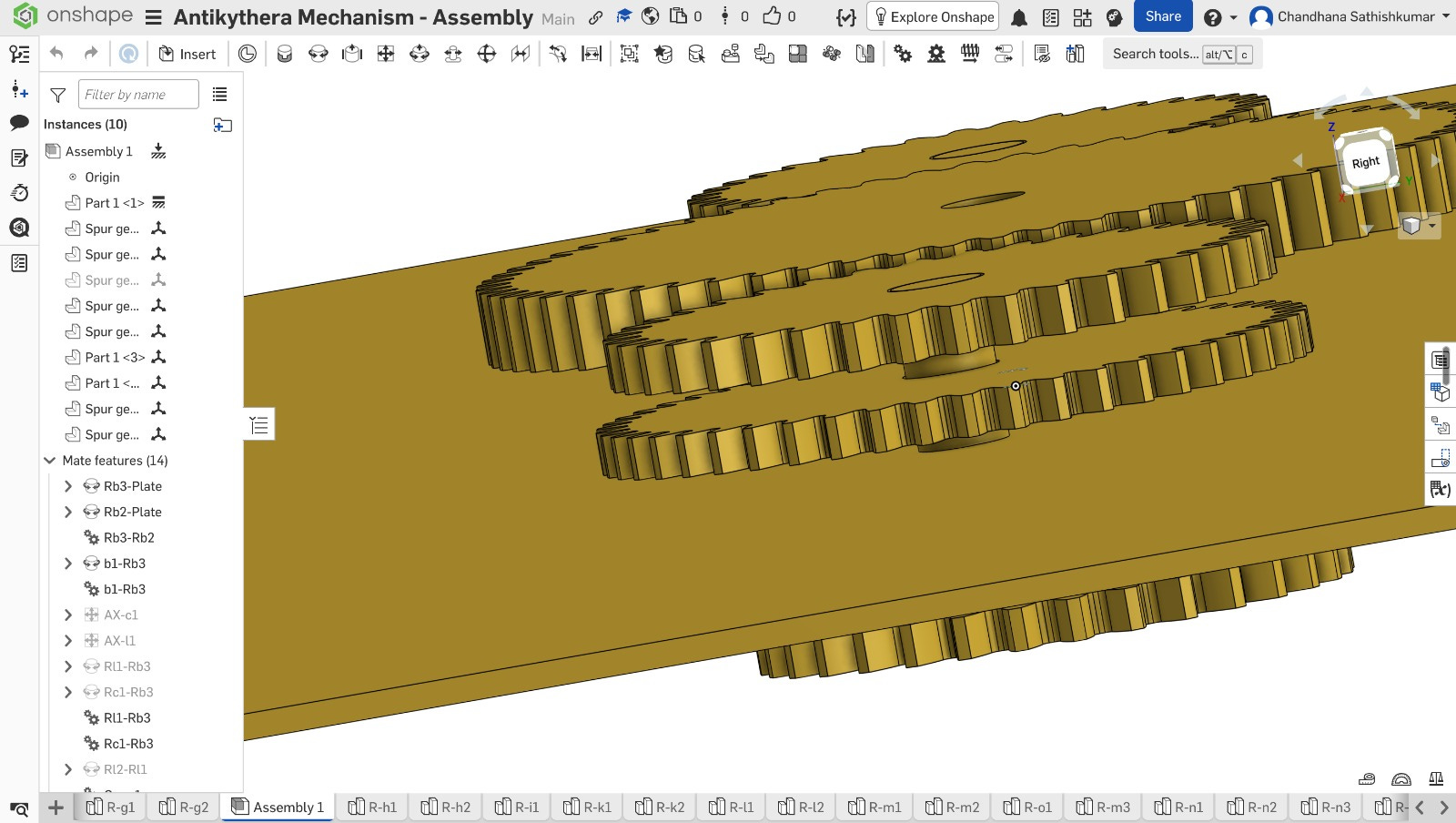
One of my initial ideas, while thinking about the mechanism, was to replicate it. I thought it was the most novel idea ever, until I showed up to Greece and every museum that seemed reasonably popular had multiple replicas (I stopped counting after 20). Although there were several attempts, including some twice the size of an iphone that you could buy for $300, none of them were functional. You couldn’t turn the singular input to see any of the cool things the mechanism would’ve displayed.
We have no fully rebuilt physical replica today. Moreover, the physical models currently displayed in museums are mostly based on outdated data and the latest digital model made by Freeth’s team at UCL used animation software and not CAD. I’m working on making this so keep an eye out for a fully open-sourced Antikythera Mechanism!
It was hard to get in contact with most of the researchers who originally worked on studying the mechanism in Athens because a lot of them had retired, with virtually no ways of contacting them, and some had passed away. With the help of Claude, I somehow managed to find the contact of someone and meet them in person to ask them about the Antikythera metal conservation11.
This person was from NAM’s metal conservation lab and was involved with installing the Antikythera exhibit back in 2005. I asked them about the wood the mechanism was allegedly encased in but it wasn’t preserved well and most of it withered into dust. Even the researcher had no clue where the remaining smithereens even were because the chain of custody of the AM was not well documented until much later. Moreover, had we had access to the sample and the ability to do radiocarbon dating, the method would only tell us when the sampled wood grew, which could be well before the tree was cut down, providing little information on when it was made into the mechanism’s case.
The metal on the Antikythera also cannot be carbon dated because metal does not have organic matter. But there are other potential ways to infer dates from inorganic elemental % composition breakdowns:
a) We might be able to model the layers of corrosion on top of the object so we can establish when the ship sank and started corroding.
b) Some composition measurements already exist. Could they be compared with more definitively dated bronze objects to look for patterns in how much copper, tin and other elements were used across different periods or workshops?
Some pushbacks here are that (a) is hard to map because the ocean conditions are so variable (i.e. hard to model) and the corrosion product is actually cleaned so any estimation of corrosion layers will have to be an approximation. And for (b) it is that metal was traded a lot and elemental ratios would prove trade more than provenance and time period.
Contested elemental composition
Despite these challenges with figuring out what the AM was precisely made of and when, people have tried. But their methods have obvious inadequacies and shortfalls.
There was a major X-ray CT dataset collected in 2005 that researchers are still working from. At the cost of outing myself, those scans are as old as I am. While the scan continues to be useful, including through improved image reconstruction in 2018, it makes me wonder what a new round of better data could reveal. Freeth was already arguing for new CT scans in 2014, pointing to unreadable details and improvements in the technology. The museum is extremely particular on the object not leaving the building let alone the country. This is why X-Tek’s specially developed BladeRunner CT scanner had to be shipped from the UK to the museum in Athens for the 2005 scans.
The early elemental tests were also done. Earle Caley and Cyril Stanley Smith got some results in Price’s 1974 study. They examined tiny bits of metal and corrosion debris using chemical tests, spectrography and microscopy, and Smith estimated that the bronze contained about 1-10% tin. Bits that were likely the corrosion residue anyway. Caley himself pointed out that the proportions in the corrosion might be quite different from those in the original metal12.
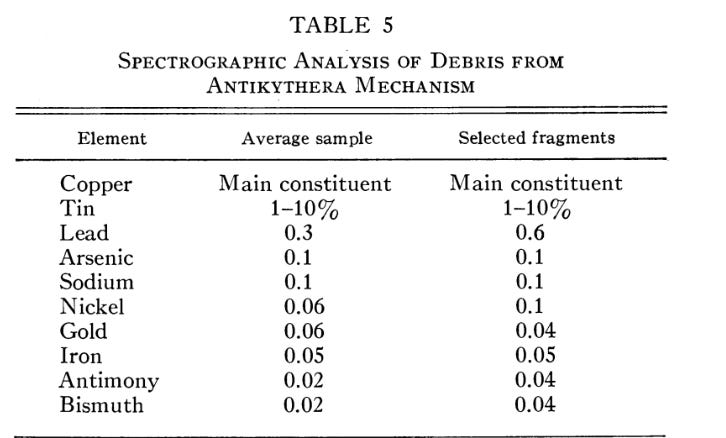
Later surface analyses by Panagiotis Mitropoulos at the University of Athens, reported by NAM archaeologist Mary Zafeiropoulou found much more tin on some fragments. One researcher I spoke to recalled a figure of 60%, which is a pretty large jump from Smith’s estimate of 1-10%. You would need to know which fragment was tested and what exactly was being measured before deciding how strange the result actually was.
The story keeps getting weirder. According to my source, their research team repeatedly asked Mitropoulos for more details, including which fragment was supposedly 60% tin. This seems like a fairly basic thing to ask about a composition measurement but: “He got very defensive about this and then said that he would not answer any more emails about it. It was not at all satisfactory. If you do such a study, in my view you have a scientific duty to present the details of your study and conclusions.”
I don’t know exactly what happened here as both the reporting researchers have now passed away. My meeting with the metal conservationist at NAM also made it evident that the museum does not know where the researchers’ notes are to even try to interpret what they were originally trying to say.
Things that can still be done
Clearly there are a lot of plausible methods to attempt in the quest to answer what is an incredibly interesting set of questions about a remarkable object. There are, to my mind, four things we can still do to understand the elemental composition of the object better, all without needing any sample of it to be destroyed.
There is a way to non-destructively map individual elements using a series of X-ray images taken at different tube voltages. Each element has an energy level at which its X-ray absorption suddenly increases called its K-edge. By analyzing how the image changes across those settings you could make an elemental map similar to a heat map. Bronze is made of Copper and Tin, and only the latter falls into the demonstrated testable range of this method.
Another way to establish elemental analysis of the bronze would be to take it to a synchrotron which uses coherent X-rays as opposed to polychromatic x-rays, suggests Tony Freeth13.
Another option is X-ray fluorescence (XRF) that identifies elements by the characteristic X-rays they emit when exposed to an X-ray beam. Portable versions of it exist.
Raman spectroscopy could help identify the compounds in that corrosion too. It’s been used before on ancient bronze to identify copper oxide and tin oxide.
All these techniques would need extra attention to make sure the data we’re getting isn’t just from the correct layer. Besides that, all of this would likely help clarify the elemental composition with some degree of certainty, they don’t help us understand how old the object was. And still remains the most important test to identify and perform.
The Antikythera mechanism is usually told as a story of people forgetting something. But the more time I spent studying it the more it seemed like – somewhat ironically – forgetting hasn’t stopped. The original researchers and divers began their work a century ago without formal bookkeeping. The notes behind the 60% tin result cannot be found. The wood that may have helped date it isn’t much more than a powder, which is also lost. So I suppose the real subject of antiquity has always been the transfer of knowledge between people, workshops, institutions and generations14. And we shouldn’t assume that once we know things, we’ll keep knowing them.
I hope this dive serves a starting point for everyone interested in the Antikythera and its mysteries. I personally will wrap up my escapade with it here. Please do write to me at chandhana.sathishkumar@gmail.com if you are interested in building off of any of the loose ends. I have the mechanism specs, CAD files I made, original scans and contacts to the researchers studying the object, which I am happy to share if you are serious!
Thank you to UNC for instigating and funding this trip. Ben Arbuckle, Tony Freeth, George Halstead and Meltem Demirors and all the researchers who wished to be unnamed, for conversations that helped shape this piece. Hiya Jain, Adam Mastroianni, Shan Sundaramahalingam, Luke Farritor, Ava Huang, Yonatan Ben Shimon, Sam Mendelsohn, Alana Goyal for reading drafts. And to Theo Bleier for letting me lock myself up on the 27th floor of the Transamerica Pyramid until I finished writing 80% of this. Any mistakes are my own.
Eclipses with the Sun, Moon and Earth in the same exact position repeat roughly every 18 years and 11 days.
There’s an extra eight hours in the previous footnote’s repeating eclipse schedule. After three of those cycles, the extra hours add up to a full day. This dial kept track of the correction so you’d get the eclipse’s time right too. This was also initially known to the Babylonians and later the Greeks. I’m blown away even by just this, let alone the mechanics to encode it.
A year contains twelve lunar months plus about eleven days. So a calendar that follows the Moon needs an extra month every few years to keep up with the seasons. Meton’s system added seven months over 19 years. Around 330 BC, Callippus refined it by combining four of these cycles and cutting one day from the total. That’s the 76-year Callippic cycle. The mechanism tracked the 19-year Metonic cycle too.
Twelve months of 20 days, plus five extra days at the end. But without leap years the calendar slowly wandered through the seasons.
For University credit too!
On the trip I saw very intricate cutting work in jewelry inlaid in gold, a dovetail-ish joint in stone, and what I believed to be the Egyptian calendar on the wall at the Karnak temple, all early signs of the type of cutting that could evolve into equilateral gear cutting in the AM.
If it’s a Greek object, why would Alexandria have the records and blueprints? The Alex library would ‘borrow’ manuscripts from Greece only to keep it for themselves and pay the fine. But to be clear we have no direct evidence that instructions for this mechanism were held there.
From Prof Arbuckle, “Greekness was everywhere not limited to modern nation state landmass. As a coastal city, Hellenistic period Alexandria is in Egypt but is at the center of the Hellenistic cultural world.”
The actual Library of Alexandria itself is long gone, but its newer successor, the Biblioteca Alexandria, is built on the same waterfront. There I was hoping to find accounts of any similar sort of device at the library, hopefully accounts of one that was made 2,000 years ago, around Cleopatra's time. I was also hoping that I could find the (actual books or copies of them) that spoke of the Antikythera-style objects. My strategy here was to ask Fable 5 what the books were, to look them up in their internal library system, and chase down the books, down to the exact page where Cicero talked about Archimedes' sphere. If you're curious about Egypt in general, you can read more about that part of the trip here.
I expected that the AM would have been in the center of the room with no objects surrounding it, or with some special lighting that clearly emphasized the oomph you get looking at its history. I was wrong. The mechanism was a lot smaller than I would have thought with very, very bad lighting and made looking at it clearly impossible. Its placement was in the center of the room, but surrounding it were objects that were partly from the shipwreck and other objects that had nothing to do with the wreck or its related history. I noticed people walking around the room a little bit confused and asking the section’s security guard where the mechanism was. Their faces were visibly upset after he pointed to it.
One of the researchers involved with studying the object for many decades now had one of their proposals rejected, even though they were compliant with all the usual requirements: you cannot transport the object anywhere outside the museum, let alone the country and the methods have to be non-destructive.
My plan was to ask the people who worked at the museum if they could lead me to the director. Because it was 45°C (113°F) in Athens and my phone felt like it was going to melt or blow up, I buried it in my bag to cool down – which meant they drew me a physical map to the NAM office and I set off on an unreasonably dramatic adventure. Go straight, take a left for 300 feet then another left until you see stairs leading up from a black gate.
The first building looked very official. Through some ad hoc Greek-English communication, I convinced the guard to take me to the archaeologist on duty. Her room looked exactly like whatever you’d imagine an archaeologist’s room in Greece would look like. Anyways, turns out this was the Numismatic Museum office. My map was wrong. I was kindly pointed to the actual building. There I, a student researcher who flew all the way from America, charmed the guard and the receptionist, and I was escorted to the lead archaeologist’s chambers. They were considerably less charmed. I don’t understand Greek, but it seemed the receptionist was being scolded. Back in the waiting area, I bought some extra time by asking to charge my phone and opened my laptop. It auto connected to Eduroam! University wifi, of all things, had followed me here.
This is when Claude started being helpful. I searched through my papers and found someone involved with the AM who worked there. To my luck, they were in the building. The receptionist called them down, and I somehow got an entire hour of Q&A.


In theory you can also use AI to tease out elemental composition from polychromatic X-rays.
Follow up to come: I ended up needing a new piece to elaborate on my thoughts here.